Recycling and Sustainability — Garden Maintenance Palmers Green
 At Garden Maintenance Palmers Green we place sustainability at the heart of every job. Our eco-friendly waste disposal area is designed to reduce landfill, increase reuse and keep green waste circling back to productive use. Whether it's a regular garden tidy or a large clearance, our Palmers Green garden maintenance teams follow a clear sustainability framework that aligns with local borough recycling policies and the broader ambitions of North London councils.
Our approach to a sustainable rubbish gardening area is both practical and measurable. We separate arisings on-site into discrete streams — mixed green waste, wood, soil, inert material and recyclable packaging — and use local transfer networks to ensure material is handled correctly. By using colour-coded sacks and labelled bins we make separation simple for clients, and we train crews in the latest waste hierarchy so more material is diverted from general waste.
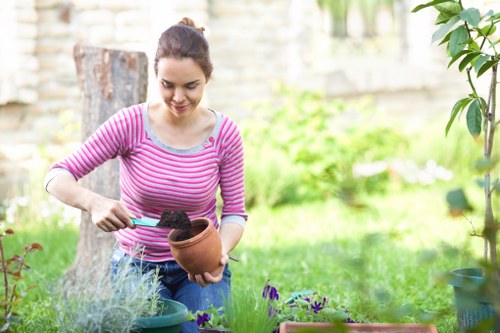 We have set a clear recycling percentage target: 70% diversion of garden and site waste within the next three years, rising to 80% for ongoing maintenance contracts. This target is monitored monthly and tied to route manifests and transfer receipts. Our targets complement the borough's approach to waste separation, which supports separate collections for glass, paper, plastic, food and garden waste where available, and encourages higher-quality material recovery.
Local transfer stations and responsible onward processing
We use established local transfer stations and processing facilities to keep journeys short and emissions low. Primary partners include transfer facilities linked to the North London Waste Authority, such as the Edmonton EcoPark and nearby contractor-managed transfer yards, which accept segregated green waste and recyclable timber. Where local capacity allows we deliver to regional composting and biomass plants to ensure organic material is transformed into compost or renewable energy rather than sent to landfill.
Our partnerships extend beyond processing: we collaborate with community hubs and charities to give reuse items a second life. For items that are reusable — such as planters, timber sleepers in good condition, and tools — we maintain formal relationships with local and national charities and social enterprises including The Salvation Army outlets, furniture reuse networks and community gardening projects. These partnerships maximise social value and reduce waste-handling costs for clients.
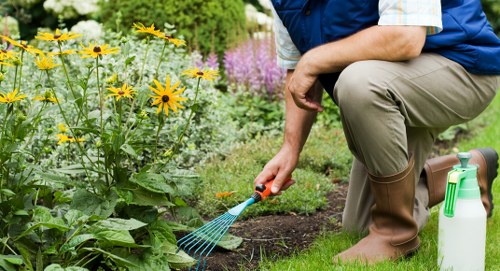 Community benefit is central to our model. We operate clear chains of custody for materials destined for donation, provide manifest documentation for larger clearances, and support local green-space projects with diverted mulch and compost. Our charity transfers are part of the sustainability story — not an afterthought.
Low-carbon fleet and operational efficiency
To reduce transport emissions, Garden Maintenance Palmers Green invests in a low-carbon fleet. Our vans include fully electric models and low-emission hybrids that handle tools, green waste sacks and lightweight hauling duties. Route optimisation software reduces mileage and idling time, while scheduled collection windows are coordinated with local transfer station opening hours to avoid unnecessary detours. Green logistics cut fuel use and help deliver a lower overall carbon footprint for garden maintenance activity across Palmers Green and surrounding boroughs.
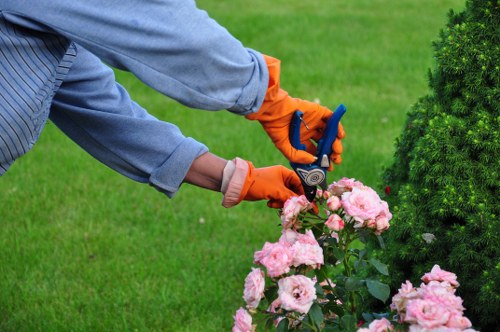 We also apply operational controls such as consolidated job scheduling and load optimisation so that each vehicle carries the maximum recyclable and reusable material allowable within safety regulations. Technicians are trained in efficient loading and correct segregation to protect material quality for recycling: clean wood, untreated soil, and uncontaminated green waste command the highest recovery rates.
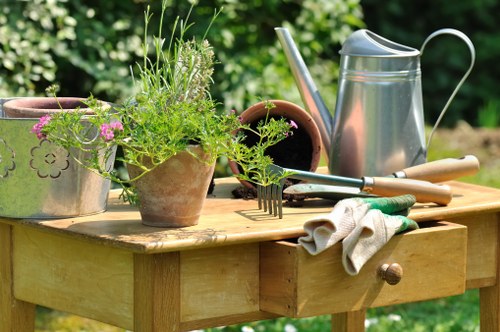 In support of the boroughs' evolving waste separation standards, our teams follow local guidance on what goes in green bins, food caddies and dry recycling. We provide clear client briefs and site signage that explain the small changes that make large differences — like removing contaminating plastics from compostable waste and keeping timber free of metal fixings when possible.
Our services also include on-site composting options for community gardens and larger estates where feasible. By establishing dedicated compost bays and providing turned compost as a resource, we close nutrient loops and demonstrate how sustainable garden maintenance can reduce external inputs. Composting reduces waste costs, improves soil health and supports biodiversity in the places where people live.
Practical commitments are backed by reporting: clients receive quarterly sustainability summaries that show the percentage of waste recycled, weight diverted to reuse charities, and CO2 savings from our low-carbon vans. These reports help housing associations, estate managers and private clients measure performance against the 70% recycling target and identify further improvements.
Garden Maintenance Palmers Green delivers a responsible, transparent approach to garden waste and recycling. By combining local transfer station partnerships, charity reuse pathways, investment in low-emission vehicles and clear on-site separation, we create an eco-friendly waste disposal area and a truly sustainable rubbish gardening area for the community.